As organizations modernize their IT landscapes, large-scale data center decommissioning has become a critical—but complex—undertaking. This blog explores the challenges, best practices, and real-world lessons for managing decommissioning projects at scale, ensuring security, compliance, and operational continuity throughout the process.
Scaling Data Center Decommissioning: Strategies, Challenges, and Best Practices
How Organizations Manage Large-Scale IT Asset Retirement and Transition
Contents
- What Large-Scale Decommissioning Involves
- Planning Drives Risk Control
- Live Environments Require Disciplined Execution
- Case Study: Global Software Company Decommissioning
- Data Destruction and Audit Readiness
- After the Hardware Leaves the Building
- Common Failure Points and How to Avoid Them
- The Takeaway
Introduction
Large-scale data center decommissioning requires structure, coordination, and evidence. When hundreds or thousands of assets are involved, teams are working across tight timelines, strict access controls, multiple stakeholders, and high security requirements. Enterprise organizations need a governed program that tracks every asset, documents every handoff, and produces records that stand up to audit.
For IT, infrastructure, operations, security, and ESG teams, decommissioning is tied to business risk. Hardware refreshes, cloud migrations, colocation transitions, lease exits, and site consolidations all create pressure to move quickly. The challenge is keeping control as project scope expands. SK Tes approaches decommissioning as a managed program with comprehensive planning, serialized asset visibility, secure execution, and audit-ready reporting.
Scale Introduces Complexity Quickly
A single rack removal is manageable with a small team and a short checklist. A full data center or multi-site program is entirely different. Volumes rise, dependencies multiply, and manual processes become harder to sustain. Asset lists can drift from physical reality, access windows can change, and coordination across internal and external parties becomes more demanding.
This is one reason the market for data center migration and decommissioning services continues to grow. Organizations are modernizing infrastructure, consolidating sites, and looking for ways to control cost and risk during transitions. In these projects, asset control and execution discipline determine whether the project stays on track.
What Large Scale Decommissioning Involves
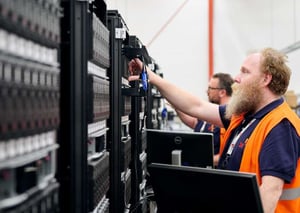
Enterprise decommissioning often takes place in live environments with active tenants, escorts, restricted loading access, and narrow change windows. Teams may need to work around production systems, follow colocation site rules, coordinate with facilities, and manage legal, finance, security and compliance signoffs along the way.
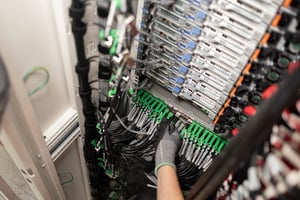
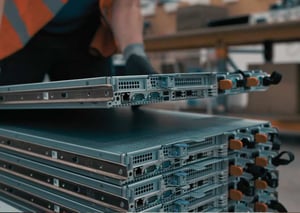
A typical large-scale project includes onsite asset identification and reconciliation, phased removal across day, night, or weekend windows, secure movement of fully populated racks, safety controls for floors and equipment paths, and chain-of-custody handovers at each stage. These activities require operational experience and a clear runbook.
SK Tes has documented this in its hyperscale decommissioning work, where serialized tracking, sanitization at scale, and coordinated execution supported strong financial and sustainability outcomes.
Planning Drives Risk Control
Planning is where an organization defines all the aspects of the decommissioning project, and ultimately how it will assess the success of the project.
The project plan and should cover:
- Scope of project: Listing business drivers such as cloud migration or facility consolidation; business environment, such as enterprise-owned or colocation; and success criteria.
- Asset inventory and data risk classification: Defining the data sensitivity and sanitization method (wipe, purge or destroy) for each device class, such as HDs, SSDs, or network devices.
- Disposition strategy: Stating how assets will be handled after removal, such as reuse, resale, or certified recycling, and the checklist for those processes.
- Site readiness: Defining access and security requirements and loading dock and movement planning, to eliminate execution risks.
- Execution plan: Phases, timelines and milestones of the project, allowing tracking and confirmation of all steps from planning and validation to onsite work to final processing and reporting.
- Tracking and audit trail: Documenting a defensible chain of custody for each asset, at each handover point and parallel workstream, for regulatory compliance and stakeholder confidence purposes.
A strong plan creates clarity around timelines, asset categories, security procedures, chain of custody, and final deliverables. It also gives internal teams confidence that every participant understands their role before any hardware is moved.
SK Tes places readiness and asset visibility at the center of its decommissioning approach because project outcomes depend on knowing what exists, where it is, and how it will be handled.

Live Environments Require Disciplined Execution and Minimized Downtime
Decommissioning inside an operating data center requires both operational experience and impeccable processes to avoid failures. Teams must manage equipment movement with precision. Racks may need to be removed intact. Data-bearing devices may need different handling paths. Escorts, permits, and site rules may affect timing. A missed step can create delays, security exposure, or operational disruption.
Chain of custody must be built into the workflow. Every movement and every handoff should be documented in a way that can be reconciled later. Serialized tracking and reconciliation supports this by linking physical assets to recorded events and final outcomes. This is especially important in multi-site or mixed-asset environments.
SK Tes employs a unified process that covers transportation, identification, testing, sanitization, reuse assessment, and recycling. That continuity reduces gaps and strengthens accountability.
Case Study: Global Software Company Decommissioning
A global software company selected SK Tes for a structured end-to-end decommissioning and data destruction program, tailored to its specific operational, security and reporting needs.
The project entailed the complete decommission and site readiness for handback of two 5,000-square-foot data centers. SK Tes accommodated the client with a phased execution with planned scheduling gaps, and carefully sequenced all decommissioning, collection and shredding activities to minimize disruption to operations.
The SK Tes solution comprised three integrated workstreams:
1. Certified Onsite Media Shredding
-
Secure destruction of 80,000+ data-bearing assets, with defined particle sizes of 15mm for HDDs and 6mm for SSDs and circuit boards.
-
Average throughput of up to 2,000 drives per day across mixed media types
-
Shredding performed against client’s list of serial number, with full reconciliation
-
Serial-level reports and certificates of destruction provided for audit purposes
2. Data Centre Decommissioning
-
Removal of fully populated racks from live data center environments
-
Over 400 racks removed across two sites
-
Each site completed within less than 3 weeks
3. Secure Transport, Processing & Value Recovery
-
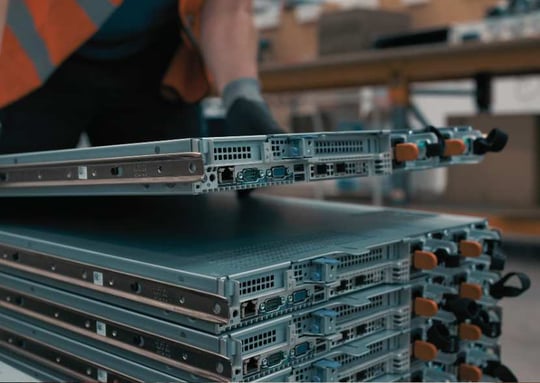
Racks transported to SK Tes facility for disassembly
-
Parent units registered and tracked on receipt
-
Equipment prepared for resale, supporting client’s value recovery objectives
Dedicated SK tes teams worked closely with the client throughout the program, maintaining consistent communication, rigorous security controls, and full operational transparency.
Data Destruction and Audit Readiness
Data destruction is one of the most scrutinized parts of a decommissioning project. Organizations may choose onsite destruction or onsite shredding for high-sensitivity assets. Others may choose sanitization and erasure to support reuse and value recovery. The right path depends on the risk profile, media type, and business objectives.
The method should be selected through policy and supported by evidence. SK Tes aligns its services with recognized frameworks such as NIST SP 800-88 and IEEE 2883-2022, and provides certificates, asset-level records, and process documentation. These records support security reviews, compliance requirements, and internal audit expectations.
This stage also affects what happens next. Assets that are properly sanitized may be suitable for reuse or resale, creating stronger financial and environmental outcomes. Assets that require destruction should still move through a controlled and documented process so the organization can show exactly what happened and when.
After the Hardware Leaves the Building
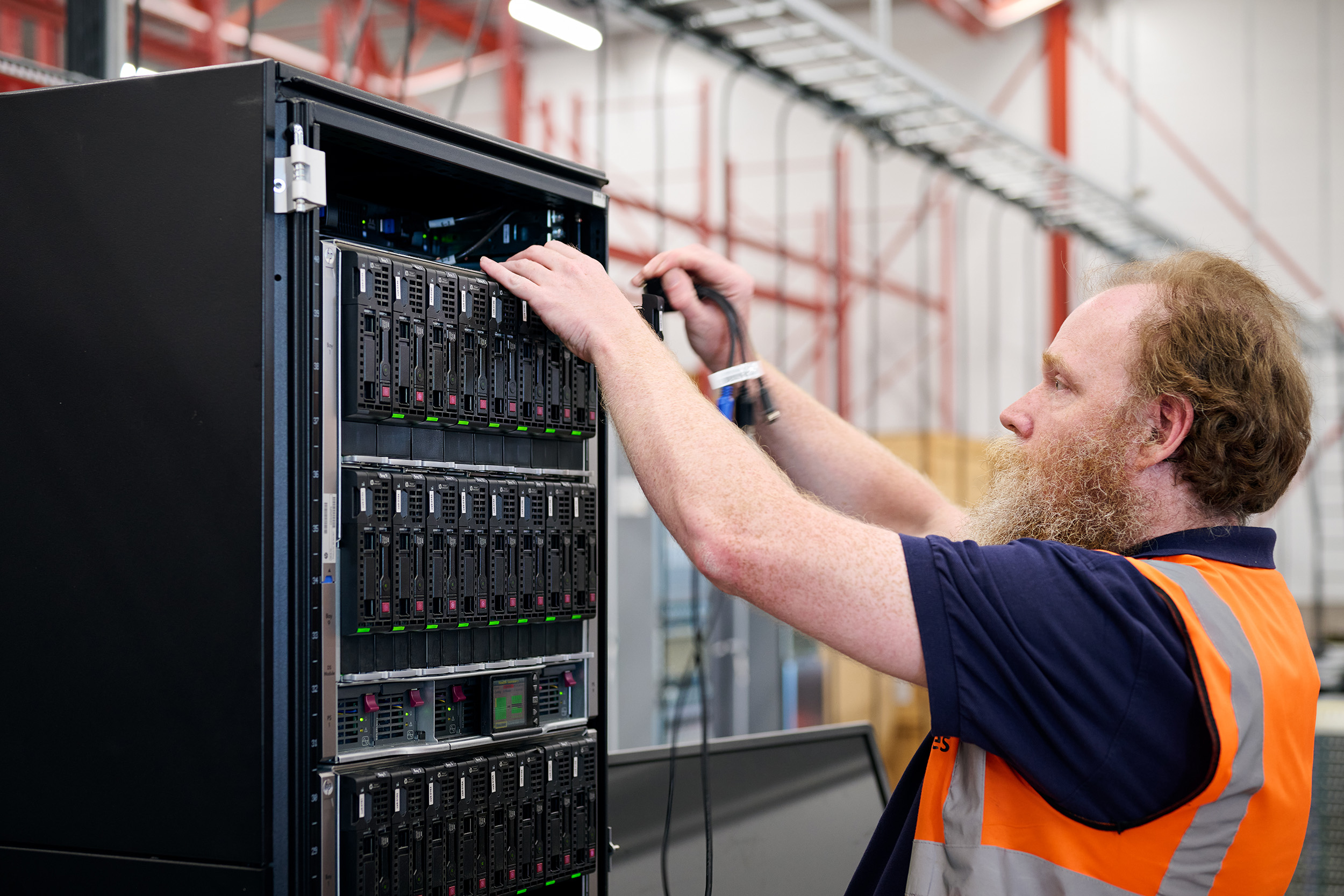
The project continues after removal from the data hall. Assets move through secure transport, downstream processing, parent-child asset tracking, and evaluation for reuse, resale, or recycling. This phase determines the financial return and sustainability outcome of the project.
Organizations often require detailed outputs at this stage, including destruction certificates, final asset reports, remarketing results, landfill diversion data, and carbon-related reporting. These outputs help security, finance, and ESG teams close the loop and document the project internally.
SK Tes connects decommissioning to value recovery and circular outcomes by assessing assets for reuse and producing the reporting needed to support internal governance and sustainability programs.
Common Failure Points and How to Avoid Them
Most large decommission issues are not caused by one dramatic mistake. They come from small control failures that compound:
- incomplete inventories
- unclear ownership or sign-off authority
- chain of custody gaps
- incorrect assumptions about colocation access, cages, or loading docks
- treating decommissioning as a logistics task rather than a governed program
Organizations avoid these problems by replacing assumptions with controls. That means readiness planning, serialized visibility, security-first execution, and evidence that can be reviewed after the fact. SK Tes’ case studies and service model reflect that exact approach: plan first, execute under control, then prove the result.
The Takeaway
Decommissioning at scale is not simply about getting hardware out of a facility. It is about reducing risk while maintaining control over security, compliance, value recovery, and sustainability outcomes.
When hundreds or thousands of assets are involved, confidence does not come from vendor promises. It comes from planning, serialized visibility, security-first execution, and audit-ready evidence.
If your organization is preparing for a data center exit, consolidation, lease end, refresh cycle, or colocation transition, SK Tes provides the governance, operational capability, and reporting discipline needed to execute at scale.
Explore SK Tes’s data center decommissioning services, review the hyperscale decommissioning case study, or learn more about data destruction and sustainability.