As hyperscale and enterprise data centers refresh infrastructure at increasing speed, the volume of end‑of‑life hardware is growing rapidly. The critical question for IT leaders is no longer just how to retire assets securely - but how to do so sustainably, compliantly, and at scale.
A recent feature from Ars Technica - Where hyperscale hardware goes to retire - offers an inside look at how modern IT asset disposition (ITAD) providers manage this challenge.
Find out more about the services that SK Tes provides to hyperscale customers by visiting our Data Center Decommissioning Services Page.
How do data center services reduce e‑waste during decommissioning?
The Ars Technica article explores how data center services reduce e-waste. Data center services reduce e‑waste by extending the life of hardware wherever possible and ensuring responsible processing when reuse is no longer viable.
At scale, this involves a structured workflow:
1. Complete asset visibility and tracking
Every device entering the facility is tagged, logged, and tracked throughout the process, including identification of all storage media, both obvious and hidden.
This level of control prevents data risk while enabling informed decisions about reuse or recycling.
2. Secure data sanitization and destruction
Devices are either securely wiped using certified methods or physically destroyed depending on security requirements. The article highlights that data security remains the primary risk during decommissioning, reinforcing why certified processes are essential.
3. Testing, grading, and refurbishment
Once secure, assets are assessed for functionality, cosmetic condition, and component value, determining whether they can be reused, resold, or harvested for parts. This step is critical in diverting equipment from the waste stream.
4. Reuse, resale, and component recovery
Working equipment is prepared for resale or redeployment, while valuable components are recovered for reuse in secondary markets. This reuse-first approach supports the circular economy and minimizes unnecessary manufacturing demand.
5. Responsible recycling and end-of-life treatment
Only equipment that cannot be reused is sent for recycling or final destruction, ensuring responsible material recovery and reduced environmental impact.
The Result: By prioritizing reuse, recovery, and controlled recycling, modern ITAD-led data center services significantly reduce e‑waste and support enterprise sustainability goals.

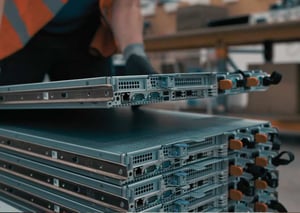
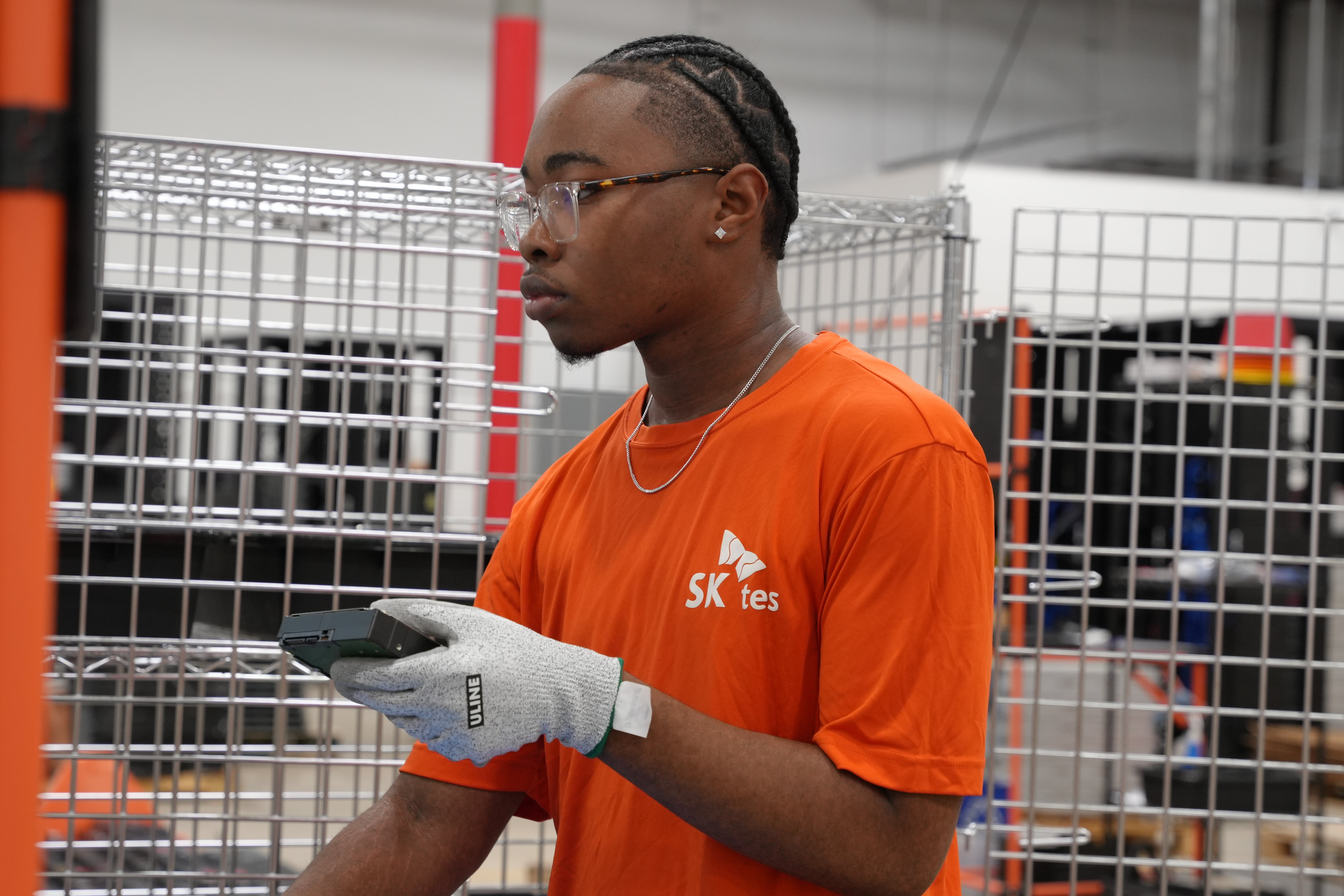
An SK Tes Team Member Processes servers at the SK Tes Virginia Hyperscale ITAD Facility featured in Ars Technica.
What data center services handle decommissioning and IT asset recovery together?
The Ars Technica article illustrates how leading ITAD providers integrate decommissioning, data security, and asset recovery into a single end-to-end service.
This integrated model typically includes:
- On-site or off-site hardware collection and logistics
- Secure chain-of-custody tracking for every asset
- Data destruction (wipe or shred)
- Detailed asset auditing and reporting
- Value recovery through resale or component harvesting
- Recycling for non-reusable equipment
Rather than treating decommissioning as a standalone activity, this approach ensures that:
- Data risk is minimized
- Asset value is maximized
- Environmental impact is reduced
In large-scale environments, particularly hyperscale data centres, this level of orchestration is essential to manage thousands of assets efficiently and securely.
Why this matters for enterprise data center strategy
The article demonstrates a shift in how organisations approach hardware lifecycle management:
- Security-first mindset: Data destruction remains the top priority
- Operational scale: Hyperscale environments require industrialised processes
- Circularity at scale: Reuse and recovery are now core outcomes, not secondary benefits
For enterprises, this means selecting partners that can deliver secure, compliant, and circular decommissioning services as a single workflow, not fragmented processes.
For a detailed, independent view of how hyperscale ITAD works in practice, read the Ars Technica feature: Where hyperscale hardware goes to retire